⚖️ Mines Act vs OSH Code — Special Powers of Inspectors
Simple comparison🚧
📘 Quick Summary
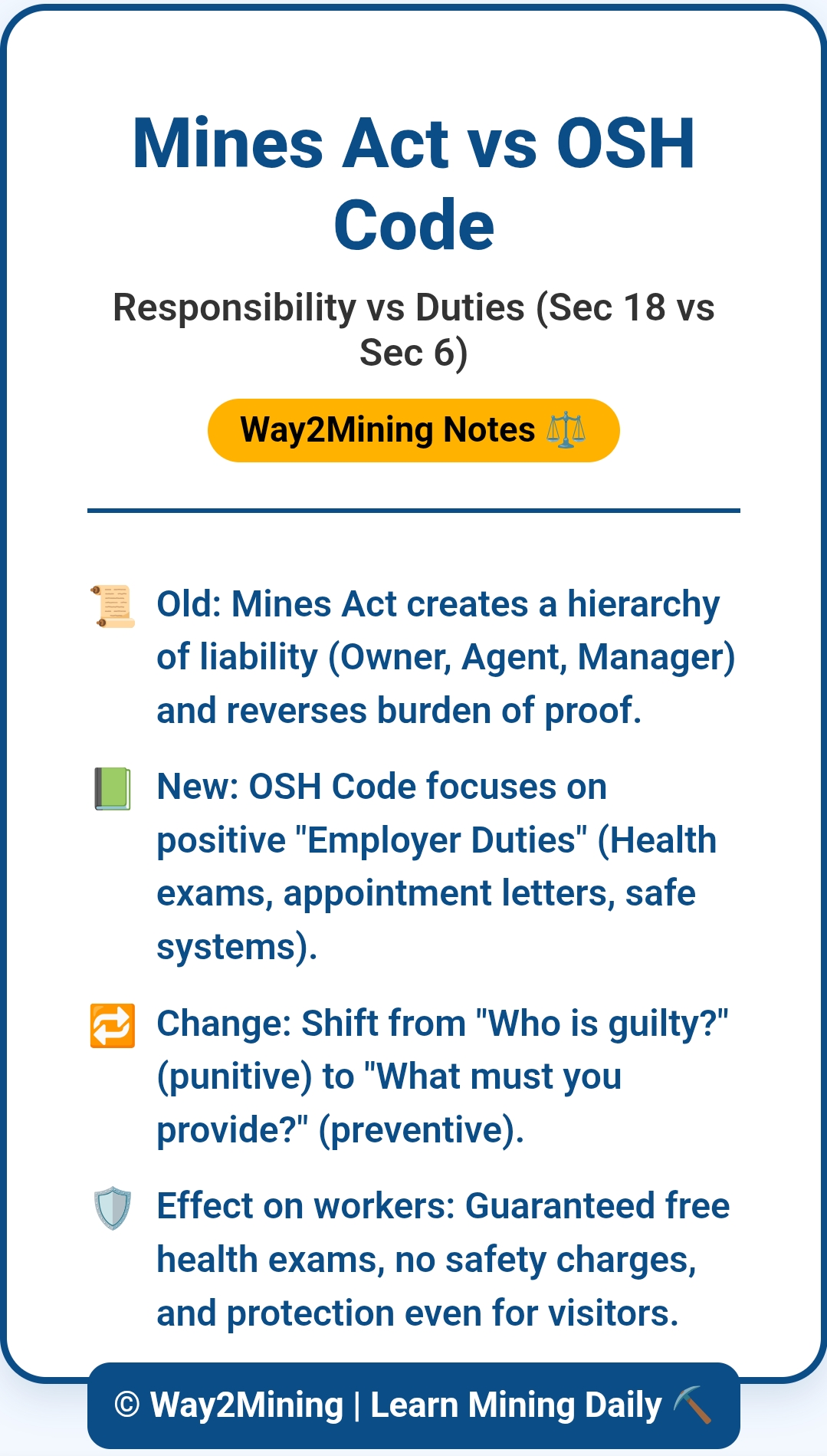
Both laws give Inspectors (now Facilitators) the power to stop work if they find a danger that isn't covered by written rules. The powers remain largely the same, but the appeal process has been made faster in the new OSH Code.
📜 Old Law – Mines Act 1952 (Sec 22)
If an Inspector finds a danger not expressly provided for, he can issue a notice. If not remedied, he can prohibit employment. Appeals went to the Central Government, which referred the matter to a Committee within 2 months.
📗 New Law – OSH Code 2020 (Sec 38)
The Inspector-cum-Facilitator retains the same powers to issue notices and prohibit employment. However, appeals to the Central Government are now decided directly (ordinarily within 1 month) without referring to a Committee.
📊 Side-by-Side Comparison
| Aspect | Mines Act 1952 (Sec 22) | OSH Code 2020 (Sec 38) |
|---|---|---|
| Designation | Chief Inspector / Inspector | Chief Inspector-cum-Facilitator |
| Power to Prohibit | Yes, if notice is not complied with. | Yes, same power maintained. |
| Final Appeal Authority | Central Govt (refers to a Committee). | Central Govt (Decides directly). |
| Decision Timeline | Ordinarily within 2 months. | Ordinarily within 1 month. |
| Wages during stoppage | Full wages or alternative job. | Full wages or alternative job. |
🔍 What Changed & Why It Matters
The biggest change is procedural. Under the old Mines Act, the Central Government had to form a Committee to decide on appeals regarding these special orders. The OSH Code removes the "Committee" step, allowing the Central Government to decide directly and faster (1 month instead of 2).

Share This News